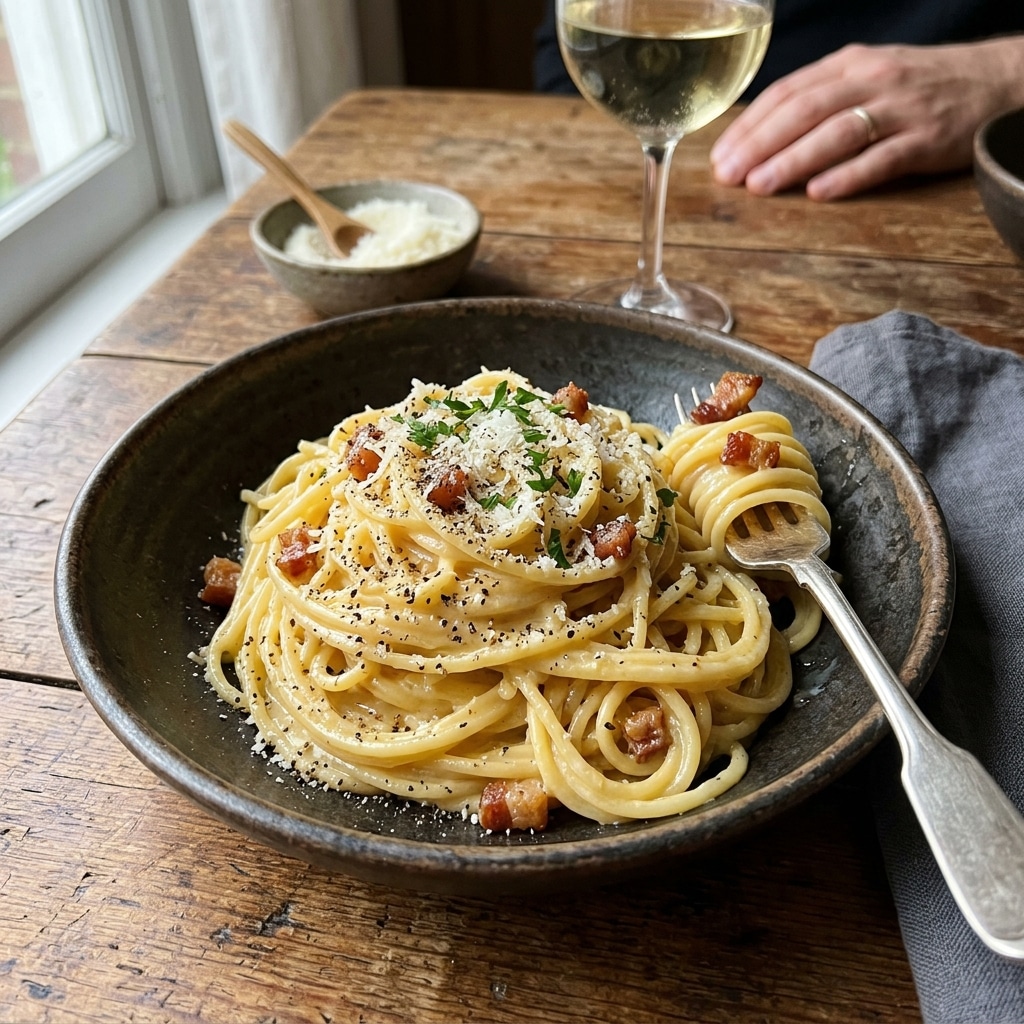
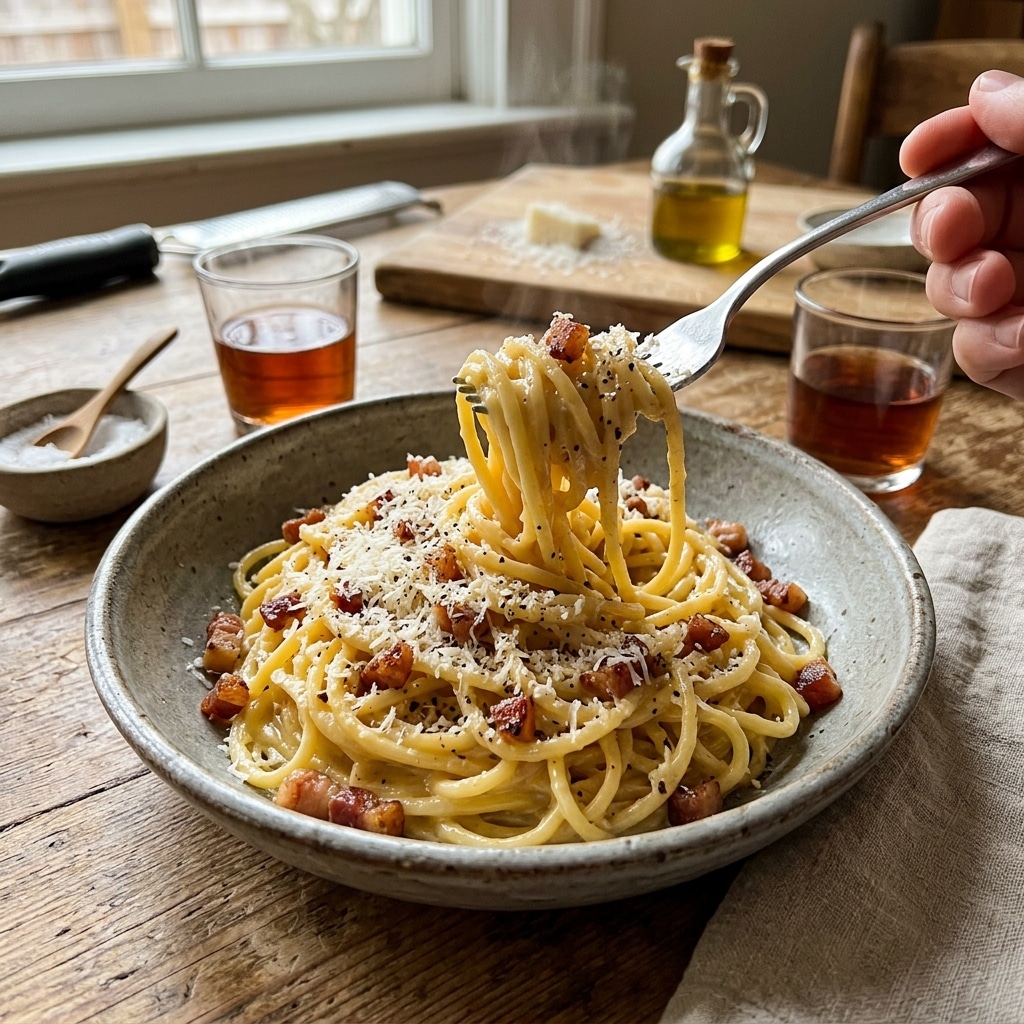
I enjoy this recipe because it is quick, satisfying, and full of authentic Italian flavor. The crispy guanciale adds a salty richness, while the egg and cheese sauce creates a silky coating around every strand of pasta.
I also like that this dish feels elegant while still being easy enough to prepare on a busy day.
Ingredients
(Here’s a tip: Check out the full list of ingredients and measurements in the recipe card below.)
1 Tbsp. salt 1 lb. spaghetti 2 large eggs 3 large egg yolks 3 oz. Pecorino Romano 8 oz. guanciale 1/2 cup pasta water freshly ground black pepper
Directions
I bring a large pot of salted water to a boil for the spaghetti.
In a medium bowl, I beat the eggs and egg yolks together. I add the freshly grated Pecorino Romano and mix until combined. I set the mixture aside.
I cut the guanciale into small cubes or lardons and place it in a non-stick frying pan. I cook it over medium heat for about 7 to 10 minutes until it becomes crisp and releases its flavorful fat.
Once the guanciale is ready, I turn off the heat. I cook the spaghetti until al dente, about 7 minutes. Before draining, I reserve some of the starchy pasta water.
Using tongs, I transfer the hot spaghetti directly into the frying pan with the guanciale. I toss everything together so the pasta absorbs the flavor from the rendered fat.
I quickly pour the egg and cheese mixture into the hot pasta while tossing continuously. I add small amounts of reserved pasta water as needed to create a creamy and silky sauce.
I finish the dish with freshly ground black pepper and extra Pecorino Romano or Parmigiano-Reggiano before serving immediately.
I sometimes use pancetta if guanciale is unavailable, although guanciale gives the most authentic flavor.
I like adding a small amount of Parmigiano-Reggiano together with Pecorino Romano for a slightly milder taste.
For extra texture, I occasionally top the pasta with extra crispy guanciale and more black pepper before serving.
storage/reheating
I store leftover carbonara in an airtight container in the refrigerator for up to 2 days.
I reheat it gently in a pan over low heat with a splash of water to help loosen the sauce. I avoid overheating because the eggs can scramble if the heat is too high.
I think carbonara tastes best fresh, right after it is prepared.
FAQs
Can I use bacon instead of guanciale?
Yes, I can use bacon if guanciale is difficult to find, although the flavor will be a little smokier.
Why is my carbonara sauce not creamy?
I make sure to mix the eggs quickly with the hot pasta while avoiding direct heat. The pasta water also helps create a smooth sauce.
Does traditional carbonara use cream?
No, authentic carbonara does not contain cream. I rely on eggs, cheese, pasta water, and guanciale fat for the creamy texture.
What pasta works best for carbonara?
I prefer spaghetti, but I also like using rigatoni, fettuccine, or bucatini.
Can I make carbonara ahead of time?
I prefer making it fresh because the sauce has the best texture immediately after cooking.
Conclusion
Spaghetti alla Carbonara is a simple yet luxurious pasta dish that delivers rich flavor with minimal ingredients. I love how creamy, savory, and comforting it feels while still staying true to traditional Italian cooking.
Classic Italian pasta made with crispy guanciale, Pecorino Romano, and a rich creamy sauce. A simple and authentic comfort food recipe perfect for dinner.
Author:Ella
Prep Time:15 minutes
Cook Time:25 minutes
Total Time:40 minutes
Yield:6 servings
Category:Main Course
Method:Stovetop
Cuisine:Italian
Ingredients
1 tablespoon salt
1 pound spaghetti
2 large eggs
3 large egg yolks
1 cup freshly grated Pecorino Romano cheese
8 ounces guanciale, cut into small cubes
½ cup reserved pasta water
Freshly ground black pepper, to tast
Instructions
Bring a large pot of salted water to a boil for the spaghetti.
In a medium bowl, whisk together the eggs and egg yolks. Stir in the freshly grated Pecorino Romano cheese and set aside.
Cut the guanciale into small cubes or lardons. Add to a non-stick skillet over medium heat and cook for 7–10 minutes until crispy and the fat has rendered. Do not drain the fat.
Cook the spaghetti until al dente, about 7 minutes. Reserve ½–1 cup of pasta water before transferring the pasta.
Using tongs, transfer the spaghetti directly into the skillet with the guanciale. Toss well so the pasta absorbs the rendered fat.
Remove the skillet from direct heat and quickly stir in the egg and cheese mixture. Toss continuously until the sauce becomes creamy. Add reserved pasta water a little at a time if needed.
Season generously with freshly ground black pepper and additional salt if desired. Serve immediately with extra Pecorino Romano or Parmigiano-Reggiano on top.
Notes
For authentic carbonara, use guanciale instead of bacon. Be careful not to overheat the eggs to avoid scrambling the sauce.