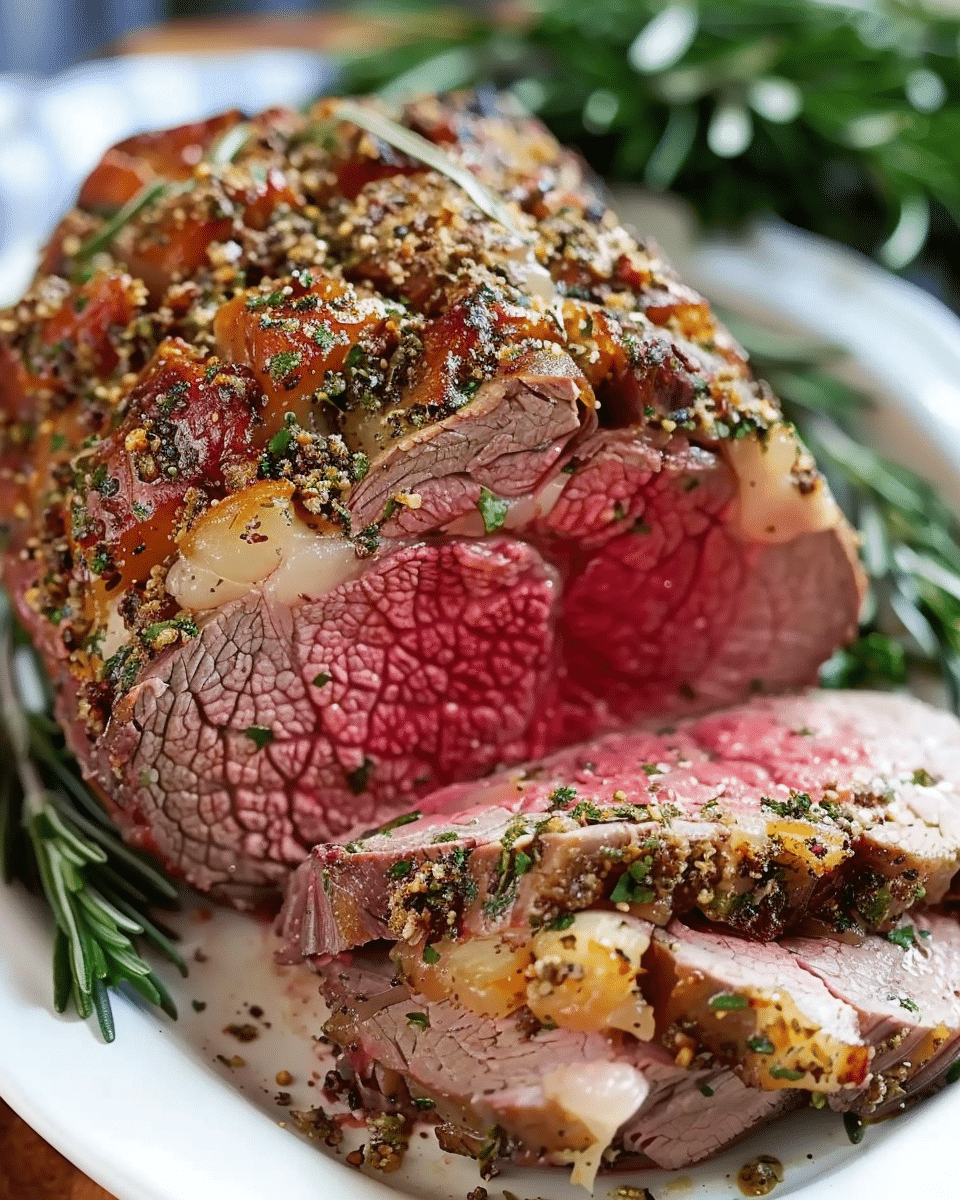
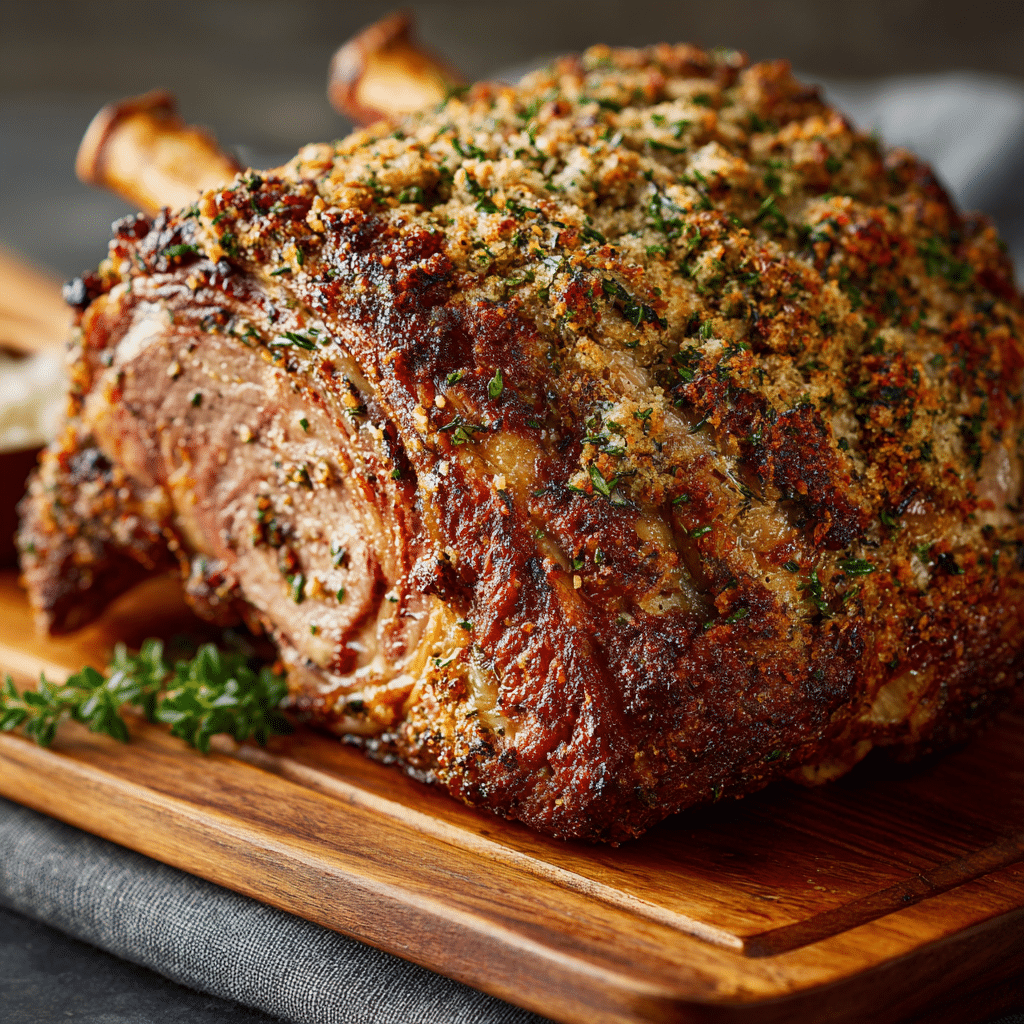
I love how this recipe turns a beautiful cut of meat into a restaurant-worthy main course without needing complicated techniques. The herb crust is bold, aromatic, and locks in flavor. Dijon mustard adds just the right touch of tang under the herbs, and roasting it bone-in ensures maximum juiciness and tenderness. It’s surprisingly easy to make and gives me plenty of time to prep sides while it roasts.
Ingredients
(Here’s a tip: Check out the full list of ingredients and measurements in the recipe card below.)
4–5 pounds bone-in prime rib roast (standing rib roast)
2 tablespoons olive oil
2 tablespoons fresh rosemary, finely chopped
2 tablespoons fresh thyme, leaves stripped and chopped
4 cloves garlic, minced
2 teaspoons kosher salt
1 teaspoon freshly ground black pepper
2 tablespoons Dijon mustard
1 teaspoon smoked paprika (optional)
Directions
1. Bring the Roast to Room Temperature I take the roast out of the fridge about an hour before cooking. I pat it dry thoroughly with paper towels — this helps create a better crust when roasting.
2. Prepare the Herb Crust In a bowl, I combine chopped rosemary, thyme, garlic, salt, pepper, and smoked paprika if I’m using it. This mix smells amazing and sets the stage for a flavorful crust.
3. Coat the Roast I rub olive oil over the entire surface of the roast, then spread a thin layer of Dijon mustard. This acts like glue for the herbs and gives a subtle tangy flavor. I press the herb mixture all over the roast, coating it evenly.
4. Preheat the Oven I preheat the oven to 450°F (230°C) to get that high-heat sear started.
5. Roast the Prime Rib I place the roast bone-side down on a rack in a roasting pan. It goes into the oven at 450°F for 15 minutes to develop the crust, then I reduce the temperature to 325°F (160°C) to finish cooking low and slow.
6. Roast to Desired Doneness I use a meat thermometer to track internal temperature:
Rare: 120°F (49°C)
Medium-rare: 130°F (54°C) — my personal favorite
Medium: 140°F (60°C)
7. Rest Before Carving Once it hits my target temperature, I remove the roast and loosely tent it with foil. I let it rest for 20–25 minutes to allow the juices to redistribute.
8. Carve and Serve I slice the roast against the grain into thick or thin slices, depending on the crowd. It’s always juicy, tender, and bursting with herb flavor.
Servings and timing
Prep Time: 15 minutes
Cook Time: ~1 hour 30 minutes (varies by doneness and size)
Rest Time: 25 minutes
Total Time: ~2 hours 30 minutes
Yield: 8 servings
Variations
I sometimes add crushed fennel seeds or a pinch of chili flakes to the herb rub for extra flavor.
Swapping Dijon for horseradish cream gives it a spicier bite.
For a wine-infused twist, I deglaze the roasting pan with red wine and reduce it for a simple jus.
I’ve made this with boneless rib roast too — same method, just a bit less cooking time.
I add quartered onions and carrots to the roasting pan for a built-in side.
storage/reheating
Leftover prime rib keeps well in the fridge for 3–4 days. I store it tightly wrapped or in an airtight container. To reheat, I place slices in a baking dish with a splash of beef broth, cover with foil, and warm in a 300°F oven until heated through. I avoid the microwave so it doesn’t overcook. This roast also makes incredible sandwiches the next day.
FAQs
Do I need to tie the roast with twine?
If it’s already tied by the butcher, I leave it. Otherwise, I sometimes tie it myself to help it keep a uniform shape, especially with boneless roasts.
Can I use dried herbs instead of fresh?
I can, but I reduce the amount since dried herbs are more concentrated — about 1 tablespoon each of dried rosemary and thyme works well.
Should I use a meat thermometer?
Yes, I always use a thermometer for accuracy. It’s the best way to avoid overcooking and get perfect doneness every time.
What side dishes go well with prime rib?
I usually serve it with mashed potatoes, roasted vegetables, or a classic Caesar salad. Yorkshire pudding or garlic butter rolls also pair beautifully.
Can I make this ahead of time?
The roast itself is best cooked fresh, but I prep the herb crust and coat the meat ahead of time, letting it sit covered in the fridge overnight for extra flavor. Then I bring it to room temperature before roasting.
Conclusion
This Perfect Prime Rib Roast with Herb Crust is my ultimate recipe for when I want a show-stopping main dish that’s actually simple to prepare. From the crisped, herby outside to the juicy, rosy center, every slice is full of flavor and tenderness. It’s the kind of dish that turns a dinner into a celebration — with leftovers that are just as delicious the next day.
This tender, juicy prime rib roast is coated in Dijon and a fresh herb crust, then slow-roasted to perfection. Ideal for holidays, dinner parties, and special occasions.
Author:Ella
Prep Time:30 minutes
Cook Time:2 hours
Total Time:2 hours 30 minutes
Yield:8 servings
Category:Main Dish Holiday Recipes
Method:Roasting
Cuisine:American Classic
Diet:Gluten Free
Ingredients
This tender, juicy prime rib roast is coated in Dijon and a fresh herb crust, then slow-roasted to perfection. Ideal for holidays, dinner parties, and special occasions.
Instructions
1. Bring to Room Temperature
Remove prime rib from the fridge 1 hour before cooking.
Pat it dry thoroughly with paper towels.
2. Prepare Herb Crust
In a bowl, mix rosemary, thyme, garlic, salt, pepper, and smoked paprika.
Rub roast with olive oil, then coat all sides evenly with Dijon mustard.
Press the herb mixture firmly over the mustard layer to form a crust.
3. Sear in Hot Oven
Preheat oven to 450°F (230°C).
Place roast bone-side down on a rack in a roasting pan.
Roast at 450°F for 15 minutes to develop a flavorful crust.
4. Slow Roast to Desired Doneness
Reduce oven temperature to 325°F (160°C).
Continue roasting until internal temperature reaches:
Rare: 120°F (49°C)
Medium-Rare: 130°F (54°C) – recommended
Medium: 140°F (60°C)
5. Rest the Roast
Remove from oven and tent loosely with foil.
Let rest for 20–25 minutes to lock in juices.
6. Slice & Serve
Carve against the grain into thick or thin slices as desired.
Serve with au jus, horseradish cream, or your favorite sides.
Notes
Use a meat thermometer for best accuracy.
Bone-in roast provides more flavor and moisture.
Serve with mashed potatoes, green beans, or Yorkshire pudding for a classic meal.
Leftovers make excellent steak sandwiches or French dip.