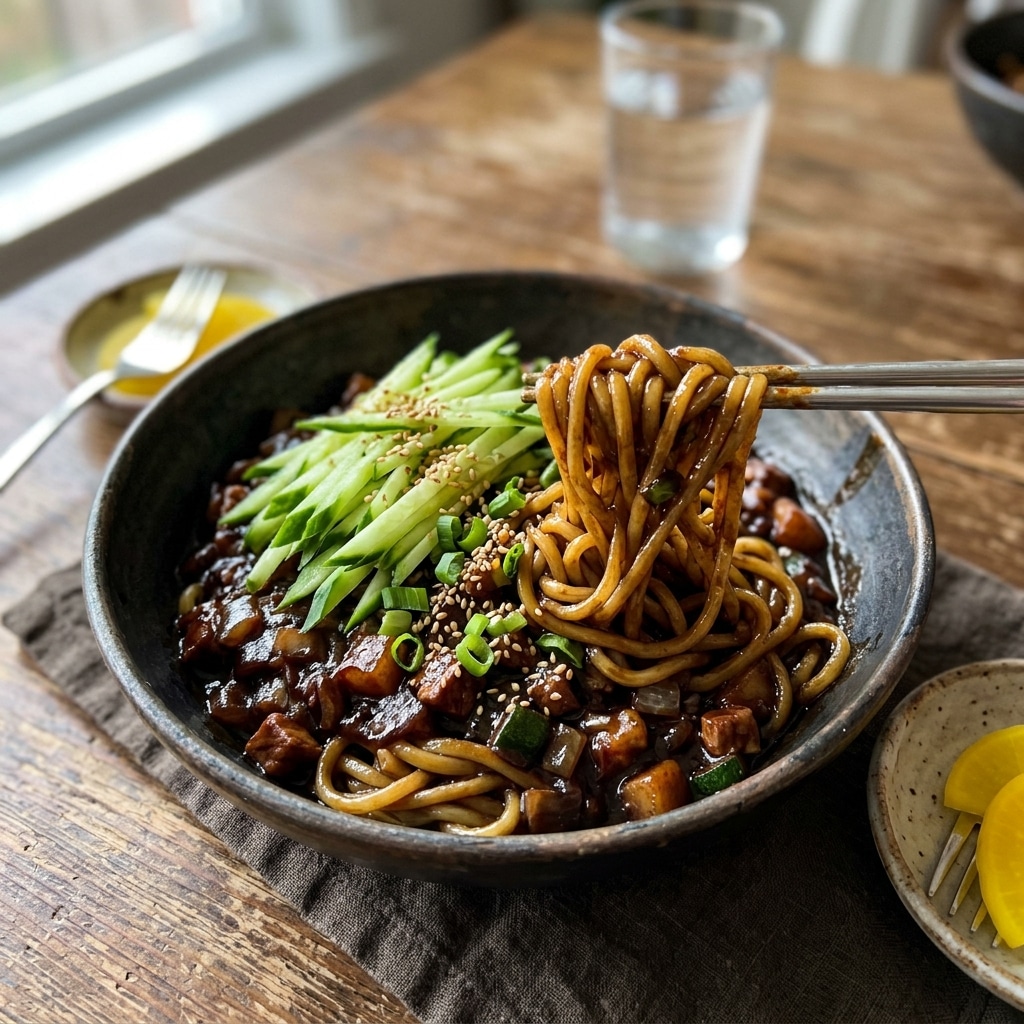
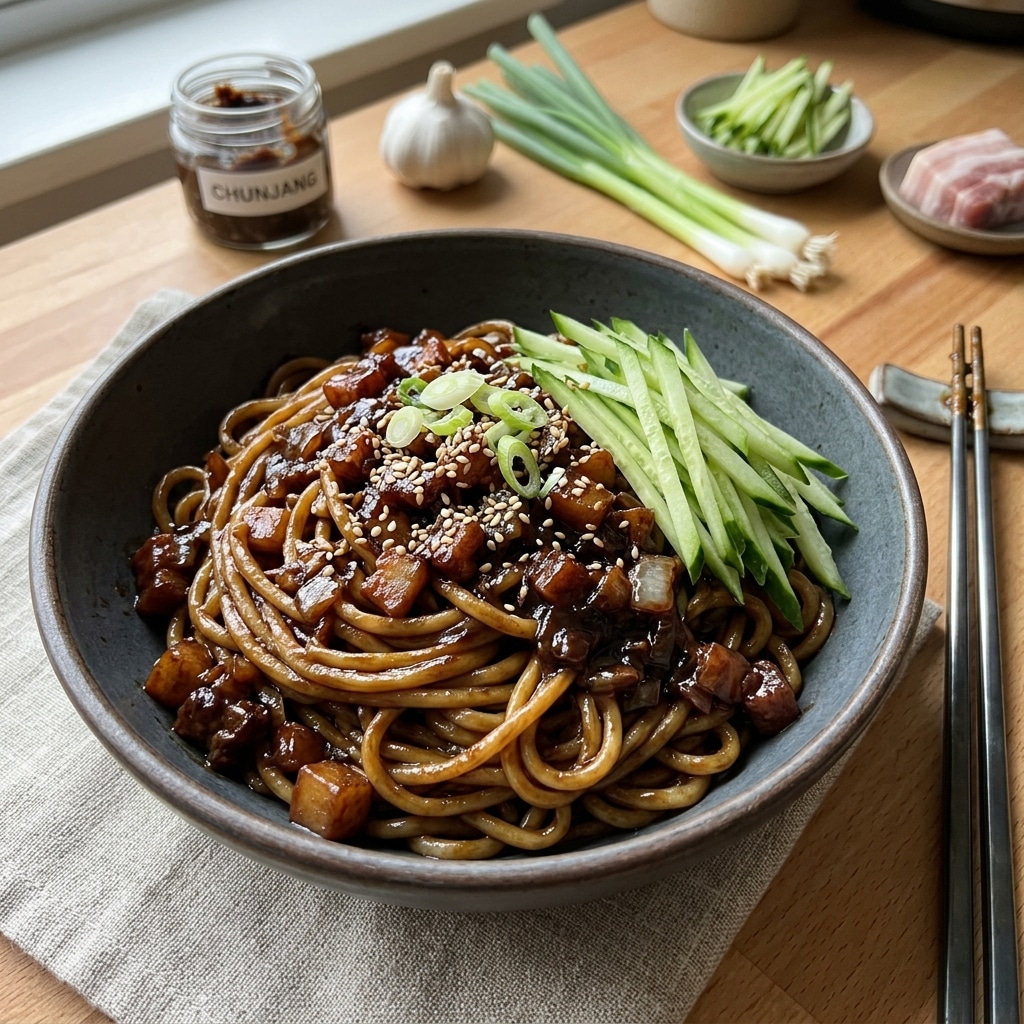
I love how flavorful and filling this dish is while still being surprisingly simple to prepare. The black bean sauce becomes thick, savory, slightly sweet, and deeply rich after simmering with pork, garlic, ginger, and vegetables.
Another reason I enjoy making jajangmyeon is how customizable it can be. I can swap the pork for chicken or seafood, adjust the sauce consistency, or add extra vegetables depending on what I have available.
I also appreciate how quickly it comes together, making it perfect for weeknight dinners when I want something warm and comforting.
Ingredients
(Here’s a tip: Check out the full list of ingredients and measurements in the recipe card below.)
⅔ cup Korean black bean paste (chunjang)
¼ cup neutral oil
1 pound boneless pork shoulder, diced
3 tablespoons garlic, minced
1 tablespoon ginger, minced
1 medium yellow onion, diced
10 ounces green cabbage, chopped
1 Korean zucchini, diced
2 cups water
3 tablespoons oyster sauce
2 tablespoons granulated sugar
3 tablespoons cornstarch
3 tablespoons water, for slurry
4 bundles Korean fresh noodles
English cucumber, julienned
Kimchi, optional
Danmuji (pickled yellow radish), optional
Directions
I begin by heating oil in a small saucepan over medium heat and stir-frying the black bean paste for about 2 minutes until fragrant.
I remove the black bean paste from the heat and set it aside.
In a large pot or saucepan, I lightly coat the bottom with oil and heat it over medium-high heat.
I add the diced pork and stir-fry until browned and fully cooked.
I reduce the heat slightly and add the minced garlic and ginger, cooking briefly until fragrant.
I add the onion, cabbage, and zucchini and cook until the cabbage starts to soften.
I stir the fried black bean paste into the vegetables and pork until everything is evenly coated.
I pour in the water, oyster sauce, and sugar, then bring the sauce to a boil.
I lower the heat and let the sauce simmer for 10 to 15 minutes until rich and flavorful.
While the sauce cooks, I boil the noodles according to the package instructions and drain them well.
If using fresh Korean noodles, I rinse them briefly with water to remove excess starch before draining again.
I divide the noodles into serving bowls.
I mix the cornstarch with water to make a slurry, then slowly stir it into the simmering sauce until thickened and glossy.
I ladle the hot black bean sauce over the noodles and top with julienned cucumber.
I serve the jajangmyeon immediately with kimchi and pickled radish on the side if desired.
Servings and Timing
Servings: 4
Prep Time: 15 minutes
Cook Time: 20 minutes
Total Time: 35 minutes
Variations
I sometimes replace the pork with chicken, shrimp, or tofu for different variations of the dish. Pork belly also creates an extra rich and flavorful sauce.
For added spice, I like serving the noodles with spicy kimchi or a drizzle of chili oil. I also enjoy adding mushrooms, potatoes, or peas for more texture and flavor.
When I want a seafood-inspired version, I add squid or shrimp while simmering the sauce.
storage/reheating
I store leftover sauce and noodles separately in airtight containers in the refrigerator for up to 3 days. Keeping them separate helps the noodles stay chewy instead of becoming overly soft.
For reheating, I warm the sauce gently in a saucepan over medium heat and add a splash of water if it becomes too thick. I quickly reheat the noodles in hot water or the microwave before serving.
I do not usually freeze the noodles, but the sauce freezes well for up to 2 months.
FAQs
What is chunjang?
Chunjang is a Korean fermented black bean paste that gives jajangmyeon its signature savory, slightly bitter, and rich flavor.
Can I make jajangmyeon vegetarian?
Yes, I can replace the pork with tofu or mushrooms and use vegetarian oyster sauce alternatives.
Why do I fry the black bean paste first?
I fry the paste to remove bitterness and deepen the flavor before adding it to the sauce.
What noodles work best for jajangmyeon?
I prefer Korean fresh jajangmyeon noodles because they have the ideal chewy texture, but thick wheat noodles also work well.
Can I make the sauce ahead of time?
Yes, I often prepare the sauce a day ahead because the flavors become even richer after resting overnight.
Conclusion
Jajangmyeon is rich, savory, comforting, and full of bold Korean flavors that make it incredibly satisfying. I love how the glossy black bean sauce coats the chewy noodles while the pork and vegetables create a hearty and flavorful meal. Whether I enjoy it for a quick dinner or a comforting weekend meal, it always feels warm, filling, and delicious.
Savory jajangmyeon Korean black bean noodles made with pork, vegetables, and rich black bean sauce. A comforting Korean noodle dish packed with bold umami flavor.
Author:Ella
Prep Time:15 minutes
Cook Time:20 minutes
Total Time:35 minutes
Yield:4 servings
Category:Main Course
Method:Stovetop
Cuisine:Korean-Chinese
Ingredients
Black Bean Sauce
⅔ cup Korean black bean paste (chunjang)
¼ cup neutral oil
Pork & Vegetables
1 pound boneless pork shoulder, small diced
3 tablespoons garlic, minced
1 tablespoon ginger, peeled and minced
1 medium yellow onion, small diced
10 ounces green cabbage, roughly chopped
1 Korean zucchini, small diced (or regular zucchini)
Sauce Base
2 cups water
3 tablespoons oyster sauce
2 tablespoons granulated sugar
Cornstarch Slurry
3 tablespoons cornstarch
3 tablespoons water
Noodles & Garnish
4 bundles Korean fresh noodles
English cucumber, julienned (optional garnish)
Kimchi (optional side)
Danmuji (pickled yellow radish, optional side)
Instructions
Stir Fry the Black Bean Paste
In a small nonstick saucepan over medium heat, heat the oil.
Add the Korean black bean paste (chunjang) and stir fry continuously for about 2 minutes until fragrant.
Remove from heat and set aside.
Make the Jajangmyeon Sauce
In a large saucepan or pot, drain excess oil from the fried black bean paste, leaving a light coating of oil in the pan. Add a little more oil if necessary.
Heat over medium-high heat and add the diced pork. Stir fry until lightly browned and no longer pink.
Reduce heat to medium and add the garlic and ginger. Stir fry for 10–20 seconds until fragrant.
Add the onion, zucchini, and cabbage. Cook for several minutes until the cabbage begins to soften.
Add the fried black bean paste back into the pan and stir well until all ingredients are evenly coated.
Pour in the water, oyster sauce, and sugar. Bring to a boil, then reduce to a moderate simmer.
Simmer for 10–15 minutes, adjusting cooking time based on your preferred sauce thickness and saltiness.
Cook the Noodles
While the sauce simmers, bring a large pot of water to a boil. Cook the noodles according to package directions.
Drain the noodles well. If using fresh Korean noodles, rinse briefly with water to remove excess starch, then drain again.
Divide the noodles into serving bowls.
Finish and Serve
In a small bowl, mix together the cornstarch and water to make a slurry. Stir well before using.
Slowly drizzle the slurry into the simmering sauce while stirring continuously. Cook for several seconds until the sauce becomes thick and glossy.
Ladle the hot black bean sauce over the noodles.
Garnish with julienned cucumber and serve immediately with kimchi and danmuji if desired.
Mix the noodles and sauce thoroughly before eating.
Notes
Stir frying the chunjang first helps remove bitterness and deepens the flavor.
Pork belly can be used for a richer version of the dish.
Adjust the sauce thickness by adding more or less cornstarch slurry.
Fresh Korean noodles provide the best chewy texture.
Serve immediately while hot for the best flavor and consistency.