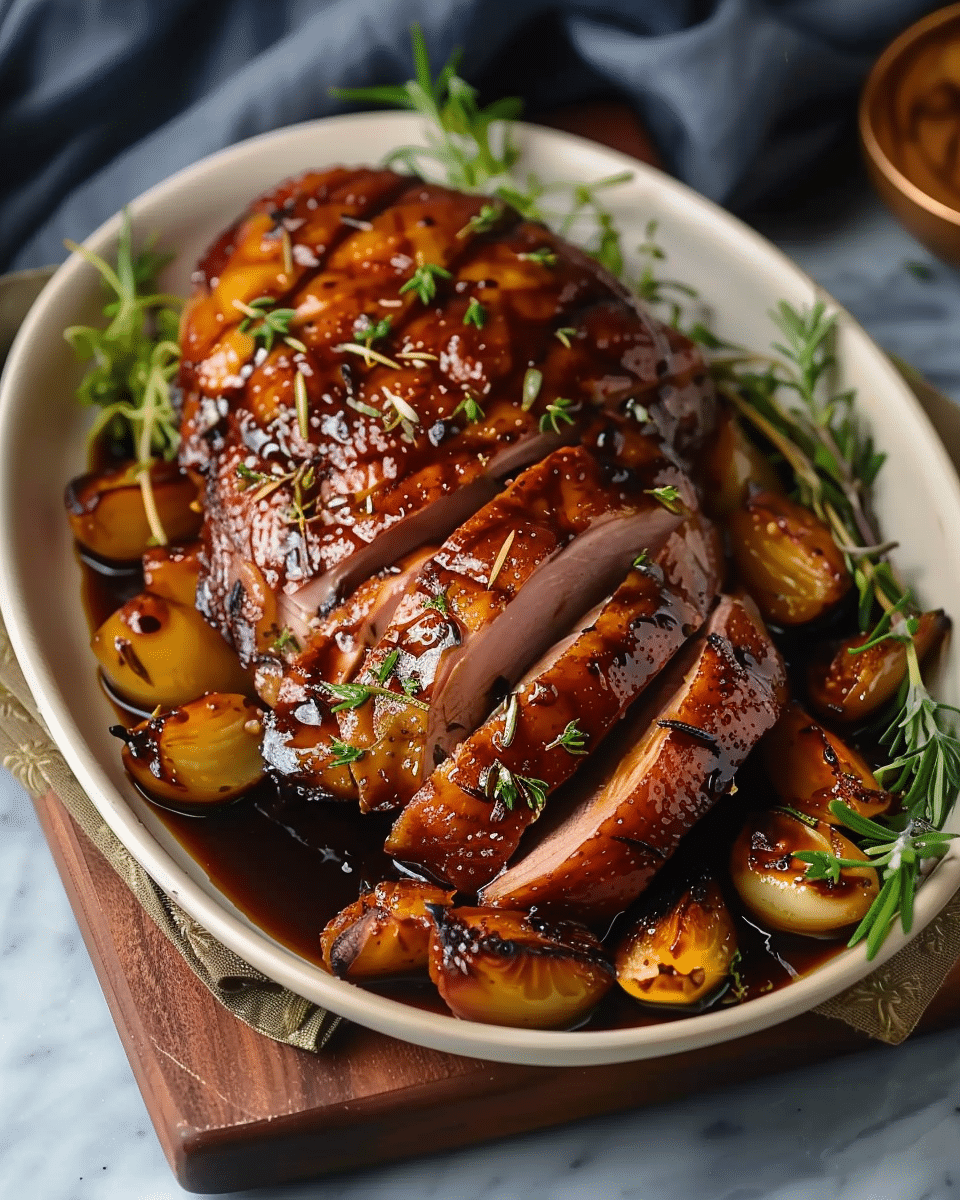
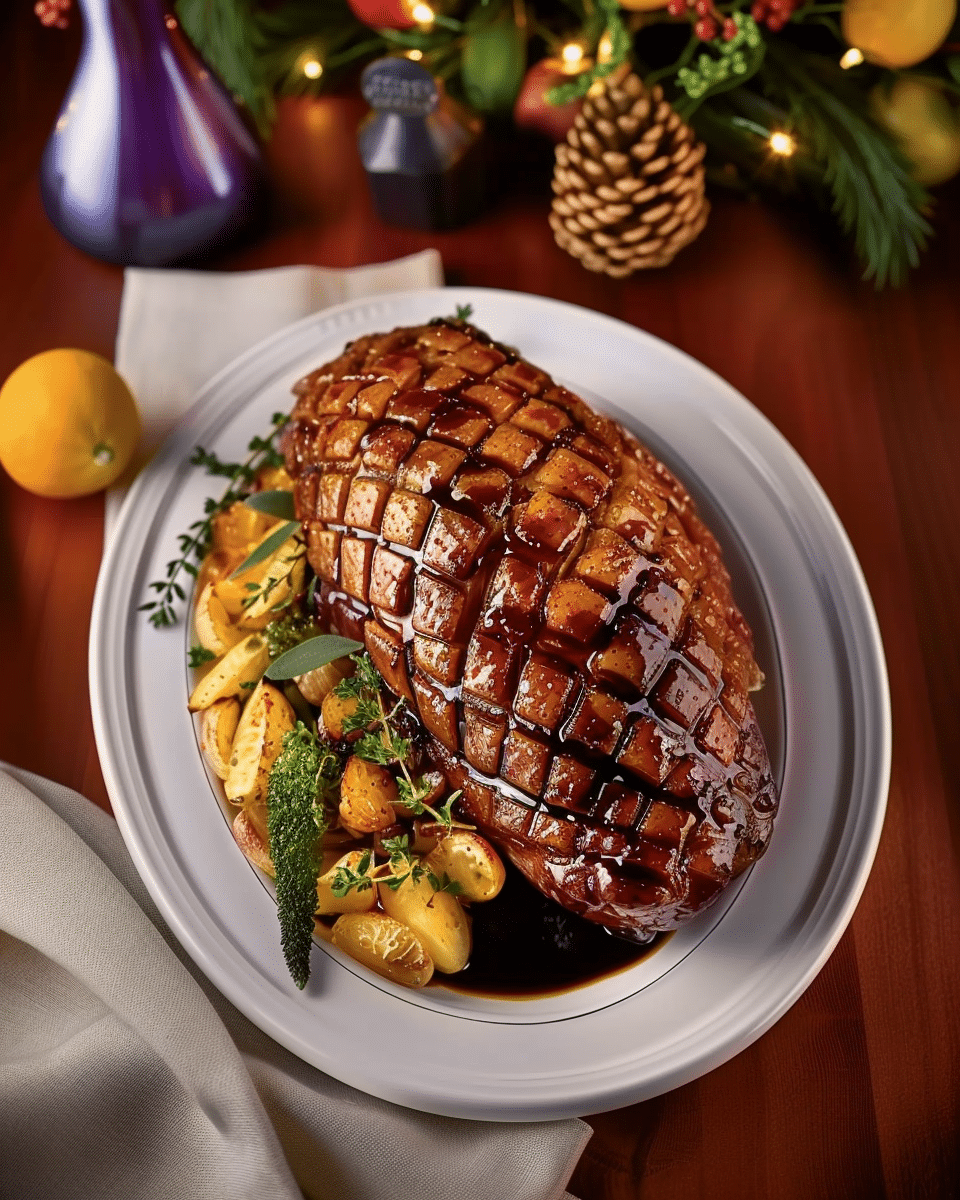
I love how this recipe brings out the natural richness of duck while balancing it with a bright, tangy balsamic glaze. The slow roasting technique renders out the fat for incredibly crispy skin, and the garlic and lemon inside the cavity subtly infuse the meat with flavor. It’s methodical and takes time, but every step brings it closer to perfection. And the glaze? It’s glossy, sticky, and absolutely irresistible.
Ingredients
(Here’s a tip: Check out the full list of ingredients and measurements in the recipe card below.)
For the duck:
Salt to taste (for seasoning inside and out)
6 lb whole Pekin duck
For the cavity:
5 garlic cloves, smashed
1 small lemon, halved
For the balsamic glaze:
1 fl oz fresh lemon juice
1/2 cup balsamic vinegar (aged preferred)
1/4 cup honey
Directions
I remove the duck from the refrigerator about 30 minutes before roasting to let it come to room temperature. This helps it cook more evenly. While I wait, I preheat the oven to 350°F (175°C).
I rinse the duck under cold water and pat it completely dry with paper towels—this step is crucial for crispy skin. Then I score the skin in a crosshatch pattern, being careful not to cut into the meat, and poke through the fatty areas to help the fat render out while roasting.
I season the duck inside and out with salt, stuff the cavity with the smashed garlic and lemon halves, and tie the legs together with kitchen twine for even roasting.
I place the duck breast-side up in a roasting pan and roast it for 40 minutes. Then, I carefully flip it breast-side down and roast for another 20–40 minutes, until the internal temperature in the thigh reaches 140°F (60°C).
While the duck roasts, I whisk together the balsamic vinegar, lemon juice, and honey to make the glaze. I set it aside until the duck is ready for finishing.
Once the duck reaches 140°F, I remove it from the oven and carefully transfer it to a cutting board. I pour off the rendered duck fat (and save it—it’s amazing for future cooking), then wipe out any burnt drippings from the pan.
I return the duck to the pan breast-side up, brush it generously with the glaze, and roast it for another 20 minutes at 350°F. I brush every 10 minutes at first, then every 5 minutes during the final 20 minutes to build up a glossy, flavorful coating. I aim for a final internal temp of 155°F (68°C).
If the skin isn’t crisp enough, I pop the duck under the broiler for 5–10 minutes, watching carefully to avoid burning.
I let the duck rest for 15 minutes before carving. I remove the lemon and garlic from the cavity, slice it into serving portions, and serve it warm while the glaze is still beautifully glossy.
Servings and timing
This recipe serves 4 people and takes approximately 3 hours and 45 minutes in total, including both preparation and cooking. I allow about 1 hour and 15 minutes for prep and 2 hours 30 minutes for roasting and finishing.
Variations
Add herbs to the cavity: Sometimes I include fresh rosemary or thyme with the garlic and lemon for extra aroma.
Use a flavored balsamic: I’ve tried this with fig or pomegranate balsamic for a different twist on the glaze.
Spice up the glaze: A pinch of crushed red pepper or a little grated ginger gives the glaze a subtle heat and extra depth.
Make it citrus-forward: Swapping the lemon for orange in both the cavity and glaze creates a sweeter, citrus-heavy profile.
Duck breasts only: If I don’t want to roast a whole duck, I use the same glaze on pan-seared duck breasts and finish them in the oven.
Storage/Reheating
I store leftover duck in an airtight container in the fridge for up to 3 days. To reheat without drying it out, I cover the duck pieces with foil and warm them in a 300°F oven for about 15 minutes. The glaze may thicken a bit, but it still tastes amazing. I also freeze carved duck for up to 2 months and thaw it in the fridge overnight before reheating.
FAQs
What kind of duck should I use?
I prefer Pekin duck because it’s tender and not overly gamey. A 6 lb bird usually serves 2–3 people generously or 4 with sides.
Do I have to score the skin?
Yes, scoring helps the fat render out and makes the skin crisp up beautifully. Just be sure not to cut into the meat beneath the skin.
Can I make the glaze ahead of time?
Absolutely. I often make the glaze a day ahead and store it in the fridge. I rewarm it gently before brushing it on the duck.
What can I do with leftover duck fat?
Duck fat is excellent for roasting potatoes, sautéing vegetables, or making flaky pie crusts. I always save it in a jar in the fridge.
Can I make this with duck breasts only?
Yes, and it’s much quicker. I pan-sear the breasts skin-side down, finish them in the oven, and brush with the glaze during the last few minutes of cooking.
Conclusion
This Classic Balsamic Glazed Duck is a showstopper of a recipe that delivers deep flavor, crispy skin, and a stunning presentation. It’s ideal for holidays or any time I want to elevate dinner with something memorable. The process is slow and deliberate, but the result is more than worth it—a perfect balance of rich duck and bright, tangy glaze in every bite.
This classic balsamic glazed duck features crispy skin, juicy meat, and a tangy-sweet glaze made with honey, lemon, and aged balsamic. A stunning main for any special occasion.
Author:Ella
Prep Time:Dry skin is essential for crispiness—pat well and don’t rush. Save rendered duck fat for roasting potatoes or vegetables. Always cook by temperature, not time; ovens vary.
Cook Time:2 hours 30 minutes
Total Time:3 hours 45 minutes
Yield:3 hours 45 minutes
Category:4 servings
Method:Roasting
Cuisine:Classic European
Diet:Gluten Free
Ingredients
This classic balsamic glazed duck features crispy skin, juicy meat, and a tangy-sweet glaze made with honey, lemon, and aged balsamic. A stunning main for any special occasion.
Instructions
For the Duck
Salt, to taste (inside and out)
1 whole 6 lb Pekin duck
For the Cavity
5 garlic cloves, smashed
1 small lemon, halved
For the Balsamic Glaze
½ cup balsamic vinegar (aged preferred)
¼ cup honey
1 fl oz fresh lemon juice
Notes
1. Prep the Duck
Remove duck from the fridge 30 minutes before cooking.
Preheat oven to 350°F (175°C).
Rinse duck and pat completely dry.
Score skin in a shallow crosshatch (don’t cut into meat) and prick fatty areas to help render fat.
Season generously inside and out with salt.
Stuff cavity with garlic and lemon; tie legs with kitchen twine.
2. Start Roasting
Place duck breast-side up on a roasting pan.
Roast 40 minutes at 350°F to begin rendering fat.
3. Flip & Continue
Carefully flip duck breast-side down and roast 20–40 minutes, until the thickest part of the thigh reaches 140°F (60°C).
4. Make the Glaze
Whisk balsamic vinegar, honey, and lemon juice until smooth. Set aside.
5. Degrease the Pan
Remove duck to a board. Pour off rendered duck fat (save it!).
Wipe pan clean to prevent burning.
6. Glaze & Finish
Return duck breast-side up to the clean pan.
Brush generously with glaze and roast 20 minutes at 350°F, brushing every 10 minutes.
For the final 20 minutes, brush every 5 minutes to build a glossy, caramelized coating.
Target internal temp: 155°F (68°C).
If needed, broil 5–10 minutes for extra crispness (watch closely).
7. Rest & Carve
Rest duck 15 minutes.
Remove garlic and lemon, carve, and serve warm with extra glaze.